
Find your way back to each other.
When the same fight keeps repeating, or betrayal has shattered trust, it can feel impossible to move forward. Couples counseling helps you understand your pattern, repair the hurt, and rebuild a relationship that feels safe again.
In person in Chattanooga · Telehealth for couples in Tennessee and Florida
The goal isn’t to win the argument. It’s to find your way back to each other.
You’re not really fighting about the dishes.
It starts small. One of you feels criticized; the other feels dismissed. Someone gets defensive, someone pulls away, and suddenly you’re in the same fight again.
Or the problem is more painful: an affair, secret pornography use, broken promises, or a betrayal that has made the relationship feel unsafe.
“Communicate better” rarely fixes either one. First we need to see the negative cycle that has taken over your relationship. Then we can change how you respond to each other inside it.
The problem isn’t always the disagreement. It’s the pattern that takes over when you disagree.
What’s keeping you apart?
Every relationship has its own story, but struggling couples often get stuck in similar patterns of conflict, hurt, and distance.
01 / Conflict
Recurring Arguments
Recognize the criticism, defensiveness, pursuit, and withdrawal that keep you having the same argument over and over.
02 / Betrayal
Affair & Betrayal Recovery
Address infidelity, secrecy, pornography-related betrayal, and broken agreements, and do the hard work of rebuilding honesty and trust.
03 / Connection
Emotional Distance
Loneliness inside marriage, fading affection, and the ache of feeling more like roommates than partners.
04 / Repair
Communication & Repair
Slow escalation, say what you actually feel, listen without defending, and reconnect after conflict.
Change the cycle, not just the conversation.
Drawing on Emotionally Focused Therapy (EFT), the Gottman Method, attachment theory, and trauma-informed care, we work on the patterns that keep you disconnected.
Identify the Cycle
See what happens beneath your conflicts: the triggers, protective reactions, fears, and unmet needs driving them.
Interrupt the Pattern
Practice slowing down, noticing when you’re flooded, naming needs clearly, and responding differently in hard conversations.
Rebuild Connection
Grow responsiveness, trust, intentional pursuit, and repair so the relationship becomes more secure.
Rebuilding trust takes more than an apology.
When an affair or hidden behavior comes to light, both partners can feel overwhelmed, for very different reasons.
The hurt partner may struggle with intrusive memories, fear, anger, and a deep need to understand what happened. The partner who caused the injury has to take responsibility without demanding quick forgiveness or trust.
Recovery needs emotional safety, honesty, accountability, clear boundaries, and room to grieve. We rebuild trust through consistent action over time, without minimizing the harm or rushing the healing.
Trust isn’t rebuilt by asking someone to believe you. It’s rebuilt through trustworthy behavior, practiced consistently.
Books I wrote for this season
 (opens in a new tab)
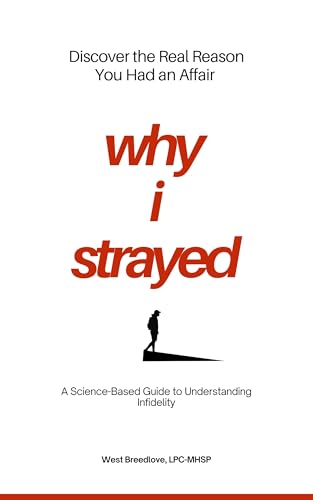
For the partner who strayed
Why I Strayed
An honest look at why the affair happened. Not a confession. Not an excuse. A map.
View on Amazon (opens in a new tab) (opens in a new tab)
For the betrayed partner
She Laughs Without Fear
A 40-day devotional for the woman walking through betrayal.
View on Amazon (opens in a new tab)A Christian foundation, clinically grounded.
For couples who want it, Christian faith can be woven into counseling alongside evidence-based approaches. Forgiveness, repentance, reconciliation, and grace can be meaningful parts of the work.
They should never be used to minimize harm, pressure a partner to forgive, or skip accountability. Faith integration is always optional, and couples of any background, or none, are welcome.
Healthy marriages don’t drift into intimacy. Love grows through intentional pursuit.
You don’t have to wait until everything falls apart.
Some couples come in after a major crisis. Others realize they’ve slowly drifted apart and want to find their way back. Wherever you are, we start by understanding your relationship and the goals you want to pursue.
Counseling may be a good fit if:
- The same disagreements keep escalating without resolution.
- You feel emotionally distant or misunderstood.
- An affair or betrayal has damaged trust.
- You want healthier conflict and repair skills.
- You’re both willing to look at your own part, not just blame each other.
Safety matters. When coercion, intimidation, or abuse is present, individual assessment and safety planning may be needed before couples therapy.

West Breedlove, LPC-MHSP
- LPC-MHSP
- NCC
- Marriage & Family Therapy certificate
- Trauma Counseling certificate
I help couples understand the negative patterns keeping them apart and build deeper connection, healthier communication, and real repair.
My approach draws from Emotionally Focused Therapy, the Gottman Method, attachment-based interventions, and trauma-informed care. The goal isn’t just to argue less. It’s to understand each other and build a more secure, connected relationship.
Helpful reading for couples.
Article
How Do I Know If I Need Couples Therapy?
Signs it’s time to get help, before things fall apart.
Read the articleArticle
How to Stop Repeating the Same Fight
Spot the cycle behind your arguments and break it.
Read the articleArticle
Signs of Betrayal Trauma: What It Feels Like and Why
Why discovery of an affair can feel like trauma.
Read the articleArticle
Gottman Method vs. EFT: Which Couples Therapy Fits You?
Two proven approaches, compared in plain language.
Read the articleQuestions about couples counseling
What happens in our first session?
We’ll talk through your relationship history, concerns, goals, and the patterns behind your current struggles, and discuss which treatment approach fits your situation.
Can counseling help after an affair?
Yes. Couples therapy can support recovery after infidelity through accountability, emotional processing, clear boundaries, and rebuilding trust. Recovery takes time, and outcomes vary.
What if one of us isn’t sure we want to stay married?
Mixed feelings are important to talk about. Depending on each partner’s goals, we’ll consider whether couples counseling or a discernment-focused approach makes the most sense.
Will you take sides?
I work to understand both partners’ experiences and the patterns between you. That doesn’t mean treating harmful behavior as equally shared responsibility. Accountability and safety stay essential.
Do we have to be Christians?
No. Faith integration is available if you want it, but it’s never required.
Do you offer online couples counseling?
Yes. Secure telehealth is available when both partners are located in Tennessee or Florida. In-person sessions are in Chattanooga.
Do you accept insurance?
Reconciled Hope is a private-pay, out-of-network practice. A superbill is available on request; reimbursement depends on your plan. See rates.
Your relationship deserves more than another round of the same fight.
Whether you’re trying to break a painful cycle or recover from betrayal, counseling gives you a structured place to begin.
Reconciled Hope Counseling, LLC · 243 Signal Mountain Rd, Suite 131 · Chattanooga, TN 37405 (opens in a new tab) · 423-930-9030